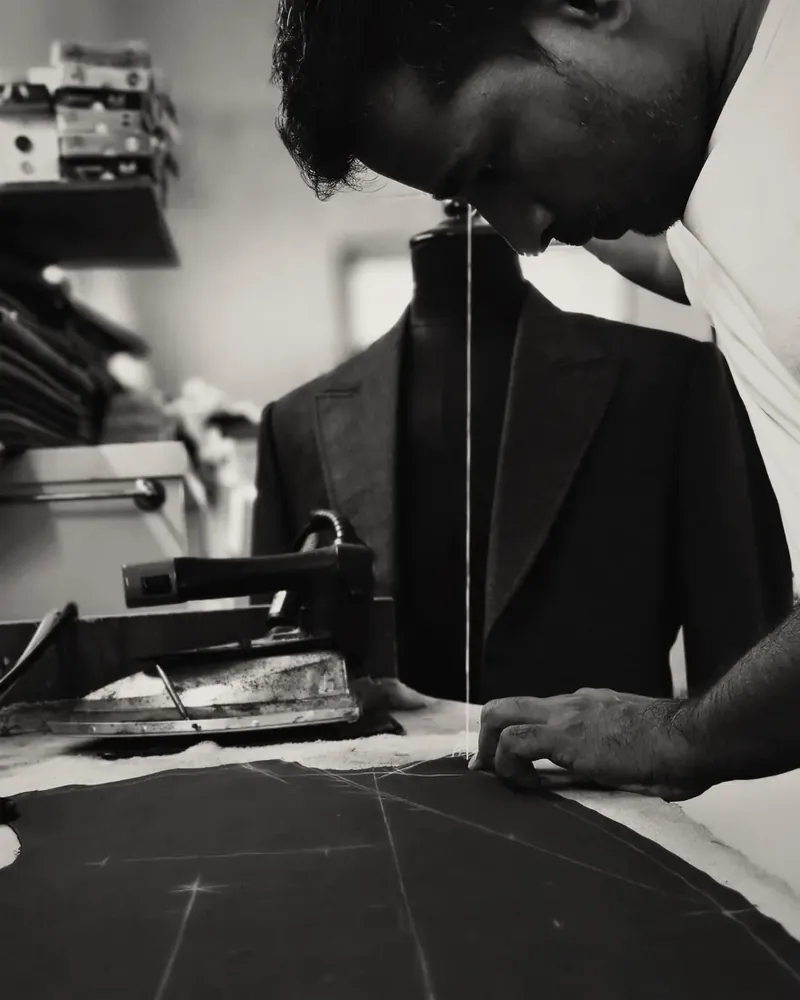
How a suit is made here.
Six steps, none skipped.
A bespoke suit is a sequence of skills in strict order. After the first sitting come the draft, the cut, the baste, the fitting, the finish and the press. Skipping a step shows later, usually at the collar.
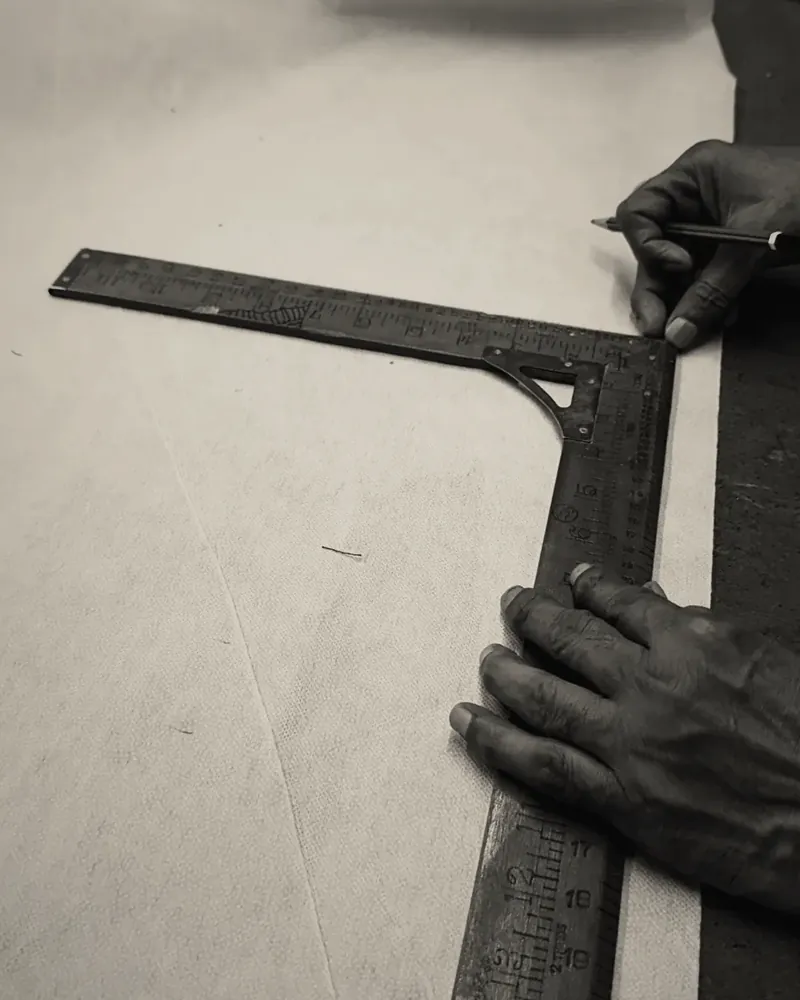
The sitting and the draft.
At the first sitting we take your measure and note how you stand: the slope of the shoulders, the arm you lead with, your posture. It is written down and kept.
Your pattern is drafted from it on paper, and we keep it on file.
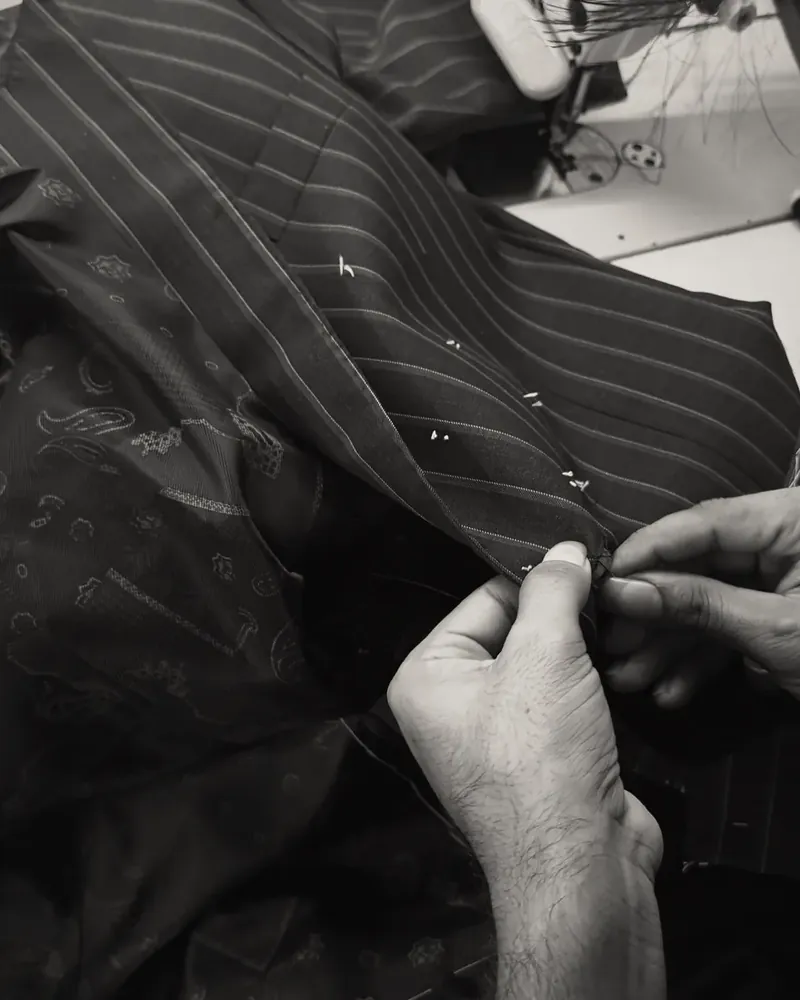
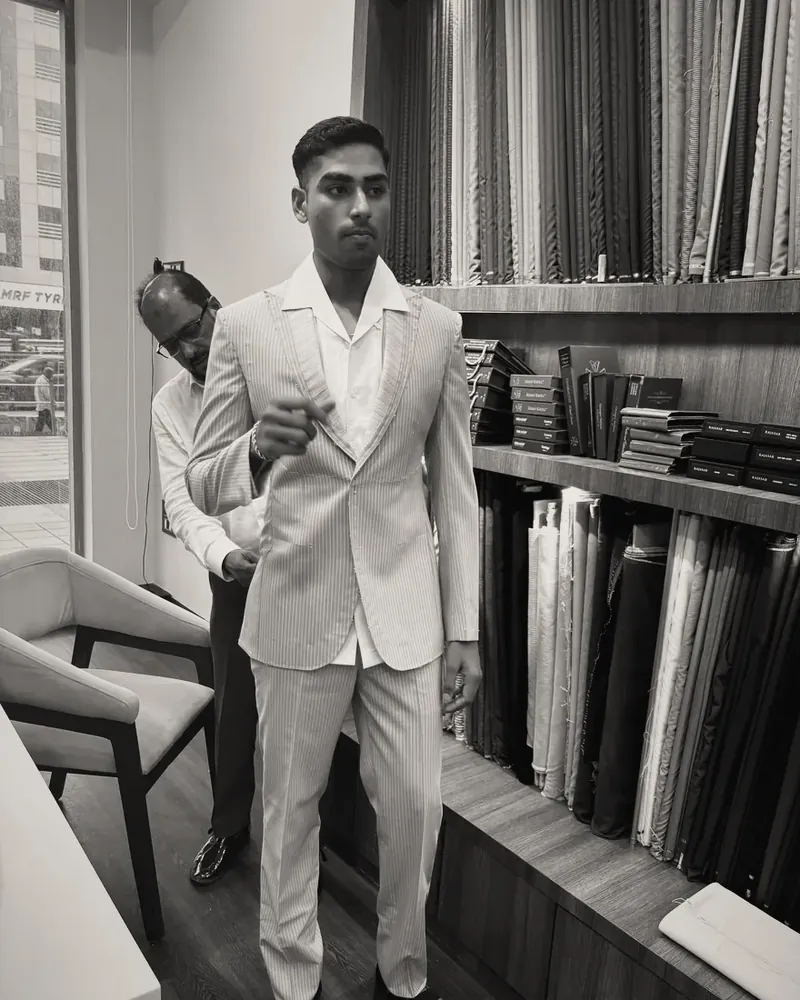
The baste · the fitting
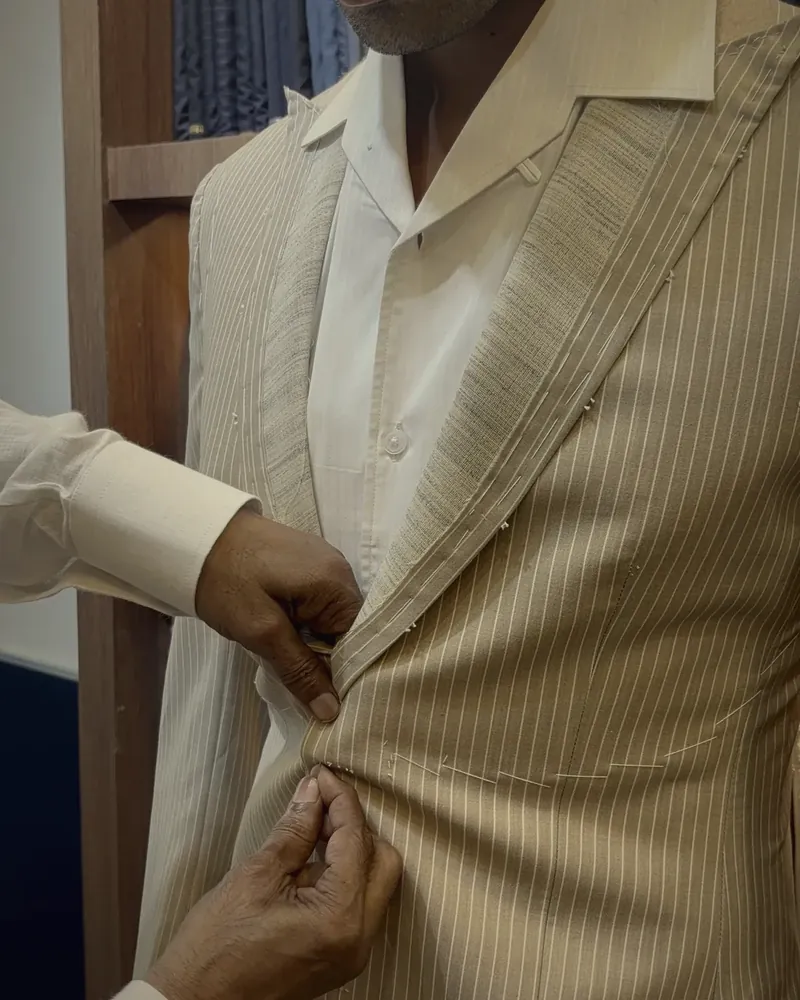
The baste and the fitting.
The basted fitting. The suit is tacked together and tried on you, so we can correct what the tape cannot show. Then it is taken apart, recut where needed and built up for a second fitting close to the finish.
Four to five weeks: one sitting, then two fittings.
The part you never see.
A canvassed chest that moves with you, instead of a glued front that bubbles in the monsoon. Sleeves set by hand so the shoulder sits quietly. Buttonholes sewn, not stamped, and a long final press.
That is why a finished suit keeps its line for years. Half canvas, or full →
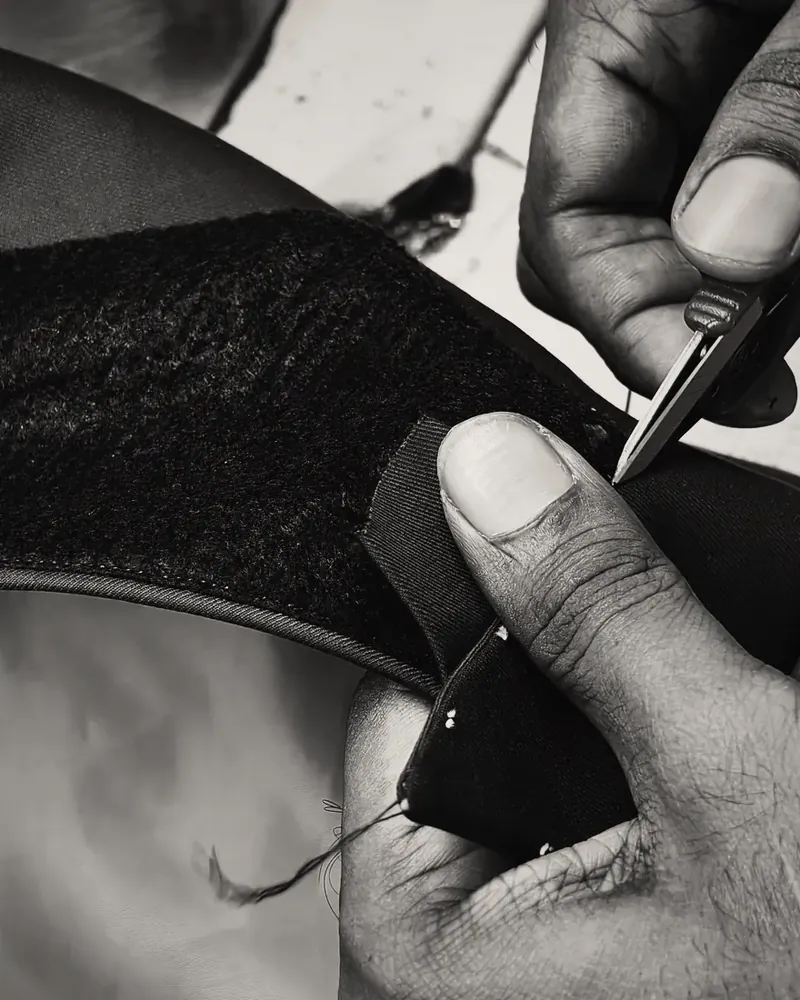
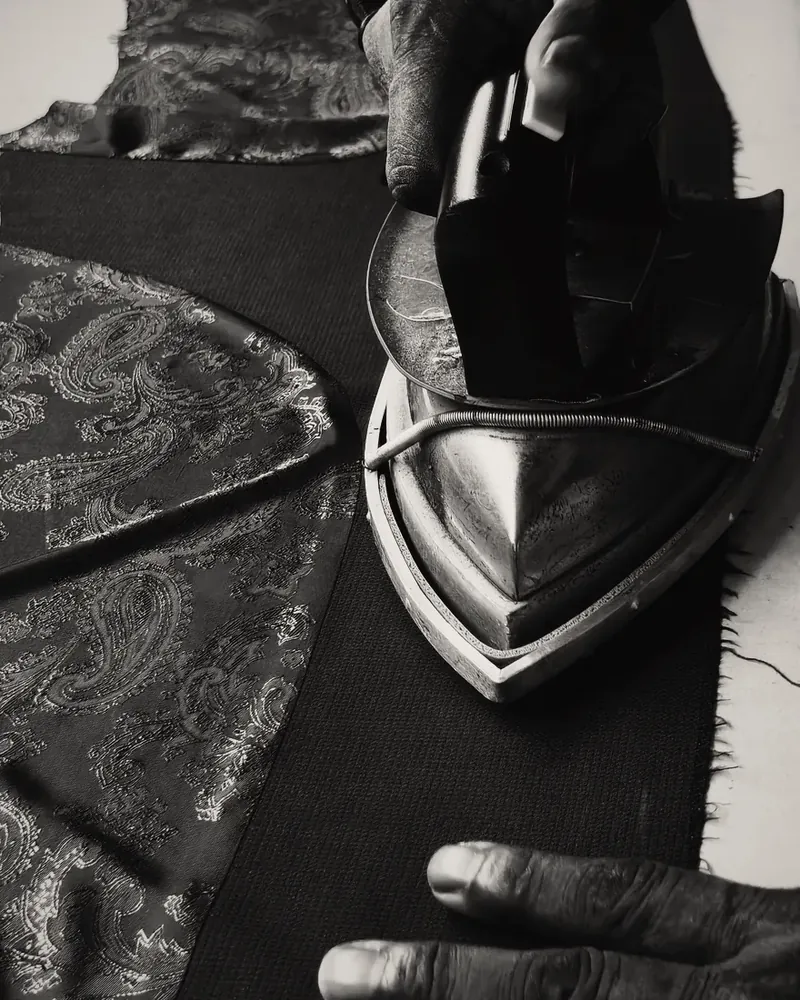
The finish · the press
Asked about the making
How long does it take?
Four to five weeks: one sitting, then two fittings. Trousers take about three weeks, shirts about two, and a sherwani ten to twelve. If there is a date, tell us at the start and we plan back from it.
How many fittings?
One sitting for the measure and cloth, then two fittings: the basted fitting and a second fitting before the finish.
What if it is not right?
Then it is not finished. We press, adjust and repair the garments we make. When we take your measure, a piece that does not fit as agreed is altered or remade at our cost within thirty days of delivery.
See what the making produces: suits, sherwanis, wedding clothes. How long a bespoke suit takes →
Book a fitting.
At the atelier in Worli or at your address in Mumbai. We confirm on WhatsApp the same day.