Tuxedo
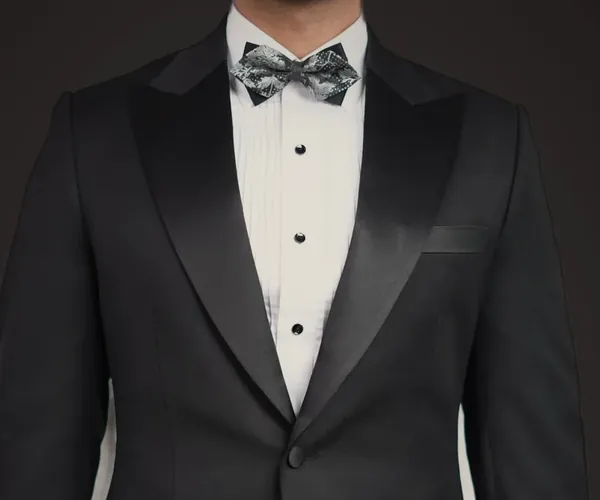
Peak lapel, faced in silk, in black
Priced at the atelierOnce the cloth is chosen. The cloth sets the final price, confirmed at the atelier.
The garment
A tuxedo is a set of decisions with correct answers: a lapel faced in silk, peaked or shawl, never notched, and one button. Ours opens in black with a peak lapel; you change the lapel and the cloth with us at the sitting. We make the evening shirt too.
What is included
The sitting, a pattern drafted for you and kept on file, and two fittings. Full canvas: add ₹15,000.
The cloth and the price
Priced at the atelier once the cloth is chosen. The cloth sets the final price, confirmed at the atelier. What the cloth costs →
Aftercare
We press, adjust and repair the garments we make. When we take your measure, a piece that does not fit as agreed is altered or remade at our cost within thirty days of delivery.

Black, one button, peak lapel faced in silk.
Your cloth is shown as a swatch and at your fitting.
Cut
Peak lapel · Two-pieceCloth
BlackThe cloth
Barathea, wool-mohair for a crisp finish under lights, and velvet for a tuxedo jacket, from the evening books of the named mills.
Barathea, mohair and velvet, chosen in the hand.
The making
A pattern drafted from your measure and kept on file. Cut by hand in Worli, basted, fitted and finished in our workshop.
A pattern drafted for you, cut by hand in Worli.
The fittings
One sitting to take your measure, then two fittings: first in the basted shell, then close to finished.
One sitting, then two fittings.
The time
Four to five weeks, from the sitting to the last fitting. For a wedding, begin twelve weeks out.
Four to five weeks. For a wedding, begin twelve weeks out.
The details
The lapel
Peak lapel faced in silk · one button, worn with a bow tie.
Asked before a first tuxedo
Peak or shawl?
Peak is the sharper line; shawl is softer and suits a tuxedo jacket. Your build and the invitations you receive decide it.
Black or midnight blue?
Under electric light, black can turn grey-green; midnight blue reads as a deeper black. We will show you both under the atelier lights. The case for midnight blue →
I have one event and six weeks. Possible?
Yes. A tuxedo takes four to five weeks. Tell us the date when you write.
Do you make the evening shirt as well?
Yes: marcella or pleated, with a collar drafted for you and cuffs for links.
Commission it from your wardrobe.
Your figures are on file; the house confirms every detail with you before anything is cut.