Sherwani
Embroidered, in ivory
Priced at the atelierOnce the cloth is chosen. The cloth sets the final price, confirmed at the atelier.
The garment
A sherwani depends on what it is built on: the canvas, the collar, the long clean line from shoulder to knee. We cut it like the formal coat it is, structured underneath and calm on the surface, to your measure. Ours opens in ivory, embroidered in thread, with a band collar.
What is included
The sitting, a pattern drafted for you and kept on file, and the fittings.
The cloth and the price
Priced at the atelier once the cloth is chosen. The cloth sets the final price, confirmed at the atelier. What the cloth costs →
Aftercare
We press, adjust and repair the garments we make. When we take your measure, a piece that does not fit as agreed is altered or remade at our cost within thirty days of delivery.

Ivory, thread embroidery, band collar, side slits.
Your cloth is shown as a swatch and at your fitting.
Cut
Band collar · Thread workCloth
IvoryThe cloth
Raw silks and brocades that hold their shape through a long ceremony, and ivories that photograph as ivory, from Indian looms.
Raw silks and brocades, chosen in the hand.
The making
A pattern drafted from your measure and kept on file. Cut by hand in Worli, structured underneath and finished in our workshop.
A pattern drafted for you, cut by hand in Worli.
The fittings
One sitting, then the fittings, standing and seated with the arms raised, because you will wear it for hours.
One sitting, then the fittings.
The time
Ten to twelve weeks. For a wedding, begin twelve weeks out.
Ten to twelve weeks.
The details
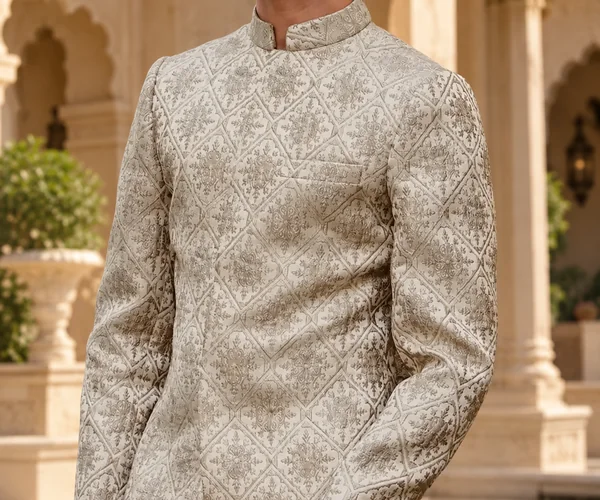
The embroidery
Thread work on ivory · band collar, closed to the neck.
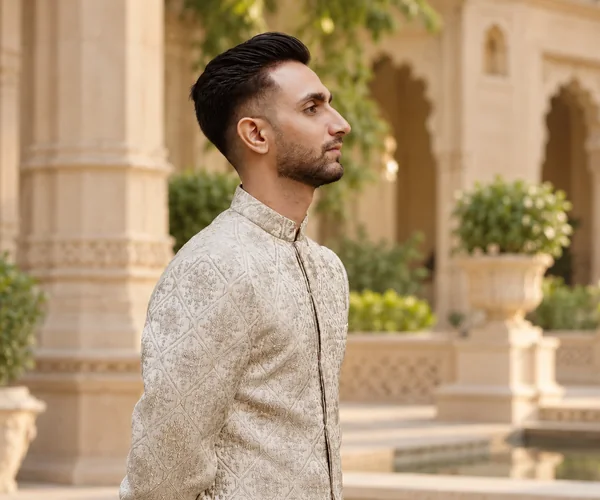
In profile
The same sherwani, from the side · the line from shoulder to knee.
Asked before a first sherwani
How early before the wedding?
Ten to twelve weeks for a sherwani. For a wedding, begin twelve weeks before the first function. Wedding clothes →
Sherwani or bandhgala?
The sherwani for the ceremony; the bandhgala for the evenings around it. A wedding week usually has both, cut to one measure.
Do you dress the groom’s family too?
Yes: fathers, brothers and friends, each measured at his own sitting, with the party planned together so the groom still stands out.
Can you work around the bride’s palette?
Bring the palette or a swatch. We choose cloth by hand against the light it will be seen in, ivories especially.
Commission it from your wardrobe.
Your figures are on file; the house confirms every detail with you before anything is cut.