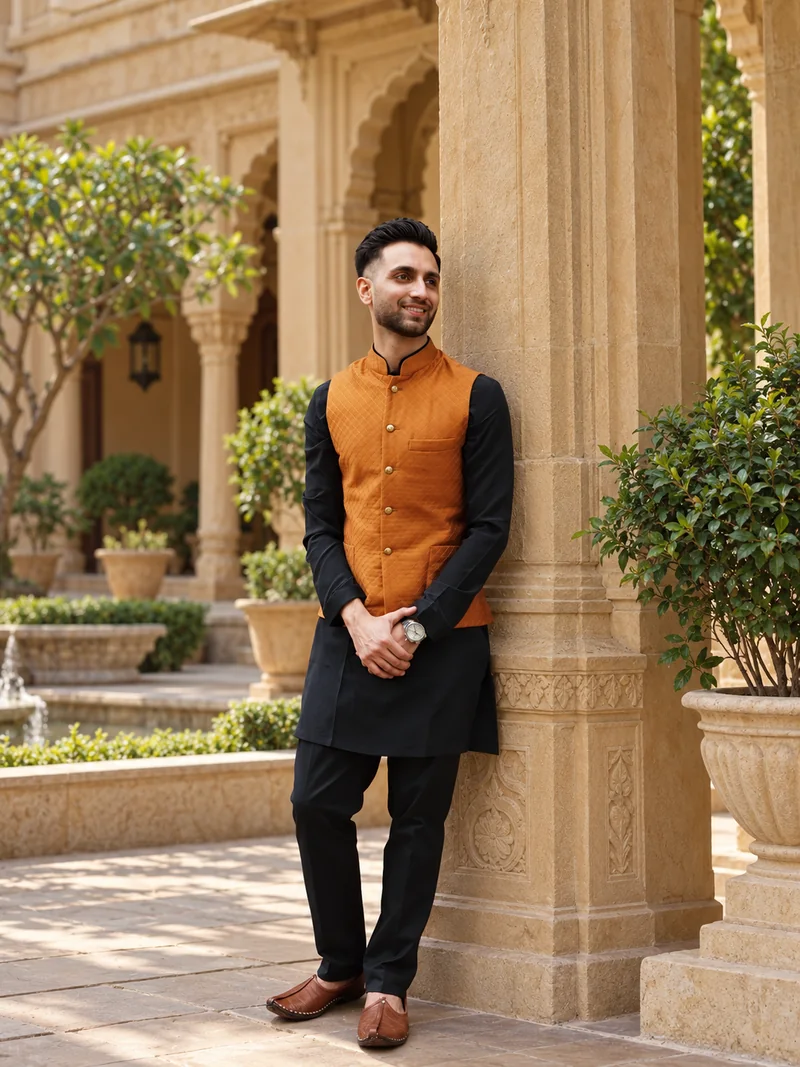
Wedding clothes for the groom and his family.
One atelier, the whole wardrobe.
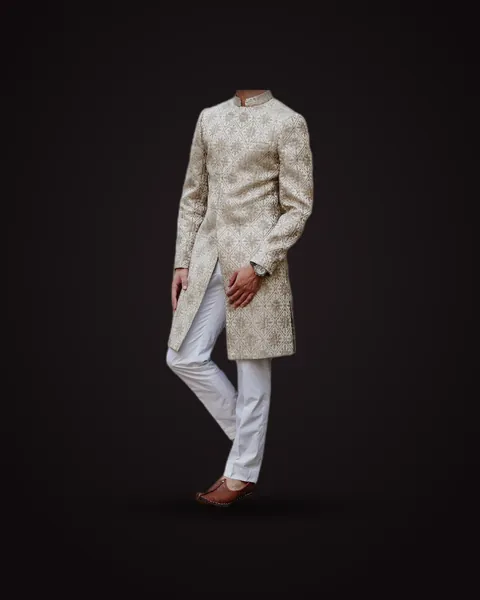
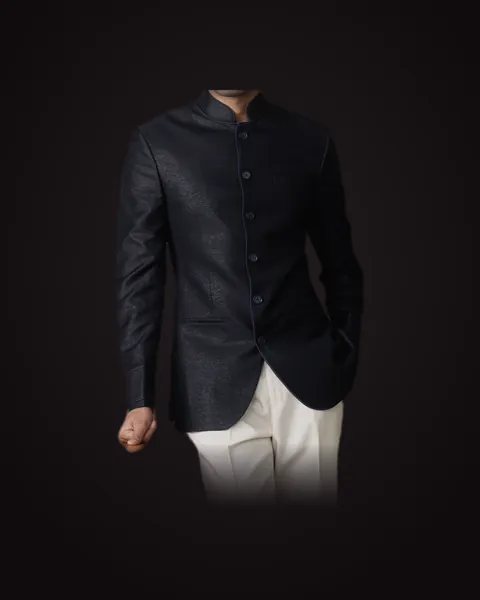
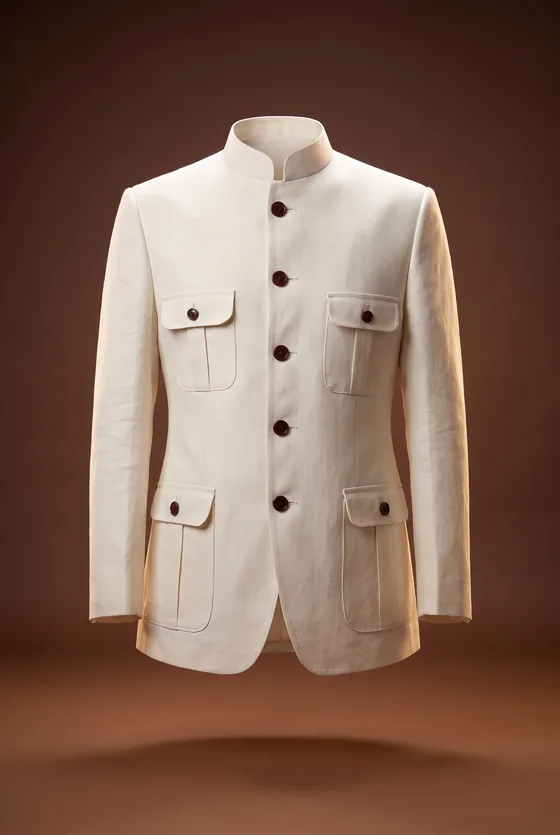
A wedding is a week of garments, not one. Western and Indian under one roof: sherwani and tuxedo, bandhgala and three-piece, cut by the same hands to the same measure.
It begins as a consultation, not an order: the dates, the functions and who is being dressed. Then the wardrobe is planned against the calendar.
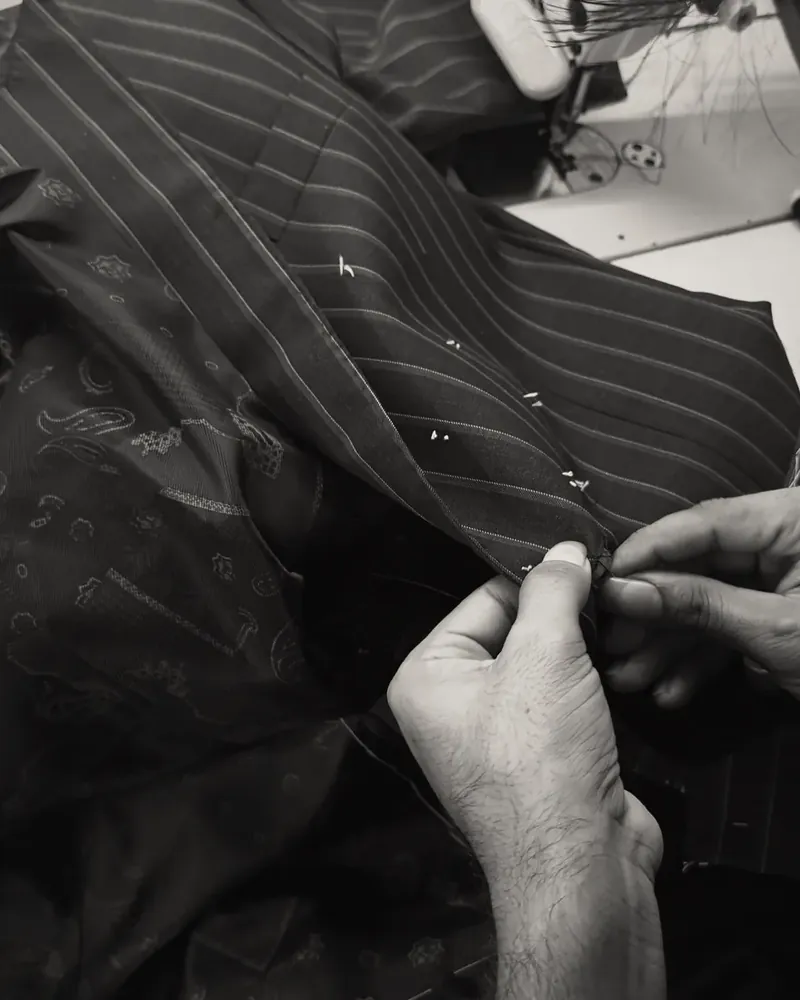
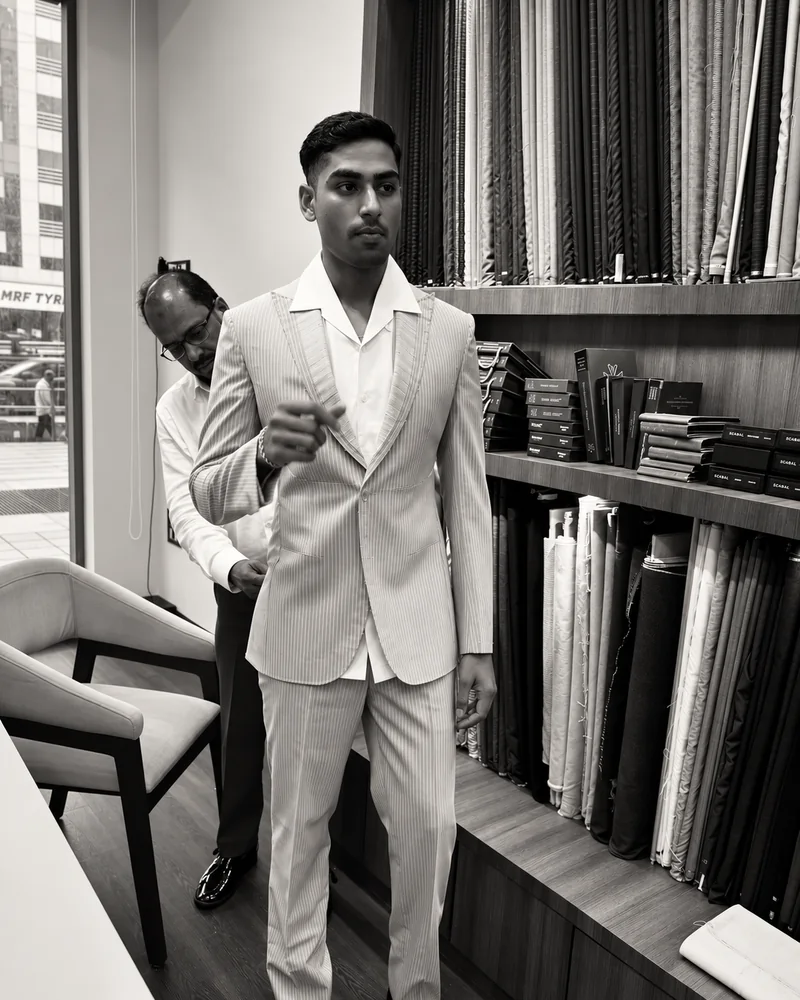
The baste · the first fitting, in the basted shell
Ceremony asks more of cloth.
Silks and brocades that hold through a long evening, worsteds for the Western days, and ivories that photograph as ivory, not white. From Loro Piana, Zegna, Dormeuil and Holland & Sherry, and from Indian looms, chosen by hand.
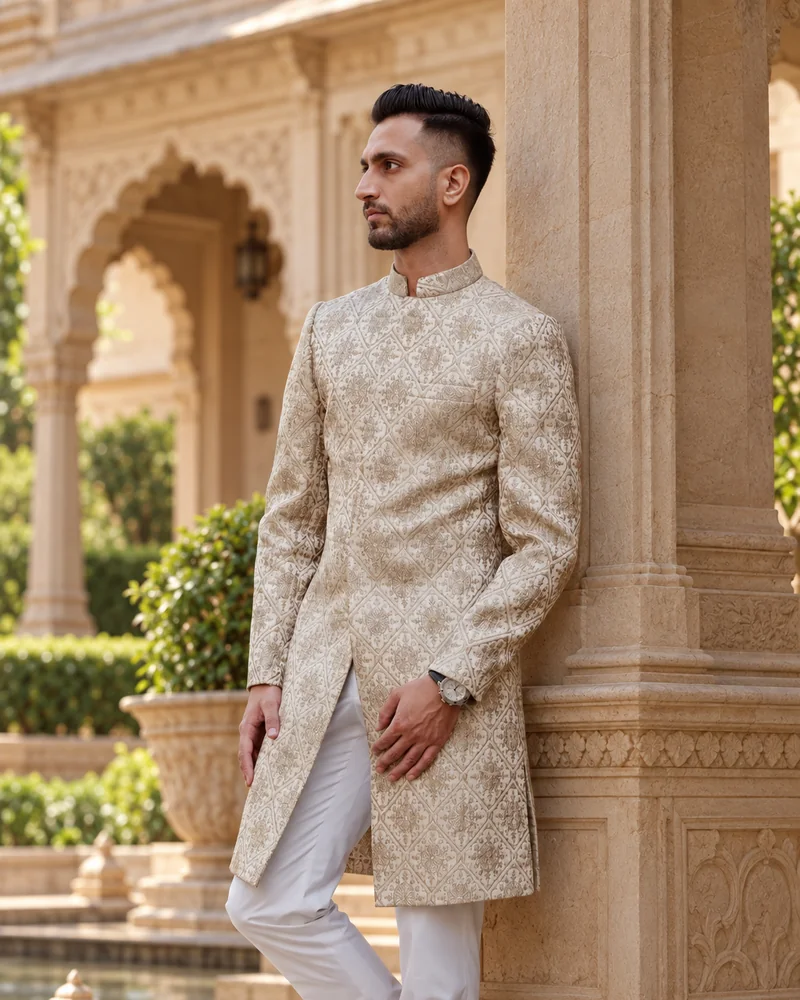
Measured once. Fitted until the day.
Begin twelve weeks before the first function. A sherwani takes ten to twelve weeks; suits, tuxedos and bandhgalas four to five weeks, with one sitting, then two fittings.
Fittings run back from the first function, and family orders follow the same calendar.
Asked before a wedding
When should we start?
Twelve weeks before the first function. If you have less time, tell us your dates and we will say plainly what can be done well.
Do you dress the family as well?
Yes: fathers, brothers, the groom’s friends. Each is measured at his own sitting, and the wardrobe is planned as one, so the party looks like a party and the groom still stands out.
Western, Indian, or both?
Usually both: a sherwani or bandhgala for the ceremonies, a tuxedo or a suit for the reception. One measure serves all of it. What a groom should wear →
Can everything be ready for one date?
Yes. Fittings are planned back from your first function, and the last fitting is a few days before the first function.
More in How a commission works →
Cut for the wedding.
One measure serves every function. Each garment opens on its own page. All garments

Book a fitting.
At the atelier in Worli or at your address in Mumbai. We confirm on WhatsApp the same day.