Jacket
Single-breasted, in grey windowpane check
Priced at the atelierOnce the cloth is chosen. The cloth sets the final price, confirmed at the atelier.
The garment
An odd jacket has nothing beneath it to hide behind, so it has to stand alone. Ours is single-breasted on two buttons with flap pockets, cut to be worn open, moved in and sat in: a lighter canvas, a softer shoulder, and a pattern that is yours alone.
What is included
The sitting, a pattern drafted for you and kept on file, and two fittings. Full canvas: add ₹15,000.
The cloth and the price
Priced at the atelier once the cloth is chosen. The cloth sets the final price, confirmed at the atelier. What the cloth costs →
Aftercare
We press, adjust and repair the garments we make. When we take your measure, a piece that does not fit as agreed is altered or remade at our cost within thirty days of delivery.

Grey windowpane check, single-breasted, notch lapel, flap pockets.
Your cloth is shown as a swatch and at your fitting.
Cut
Single-breasted · Flap pocketsCloth
WindowpaneThe cloth
Hopsacks and twills that hold their line, flannels and linens for Mumbai, and checks a suit could not carry, from the named mills.
Hopsacks, flannels, linens and checks, chosen in the hand.
The making
A pattern drafted from your measure and kept on file. Cut by hand in Worli, basted, then fitted open and closed.
A pattern drafted for you, cut by hand in Worli.
The fittings
One sitting to take your measure, then two fittings: first in the basted shell, then close to finished.
One sitting, then two fittings.
The time
Four to five weeks, from the sitting to the last fitting. For a wedding, begin twelve weeks out.
Four to five weeks.
The details
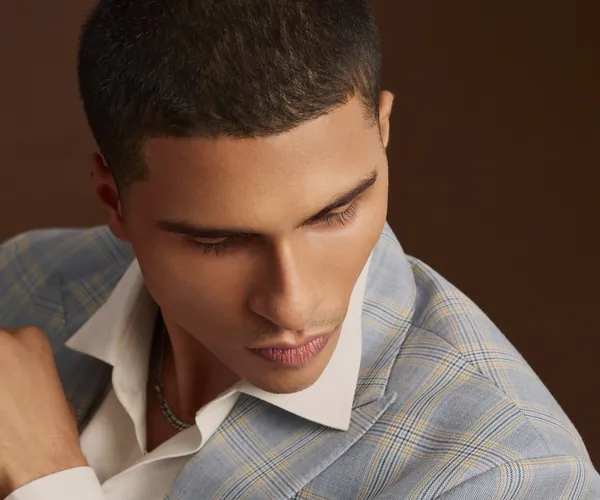
The sleeve
Working cuff buttons · the check matched across the sleeve.
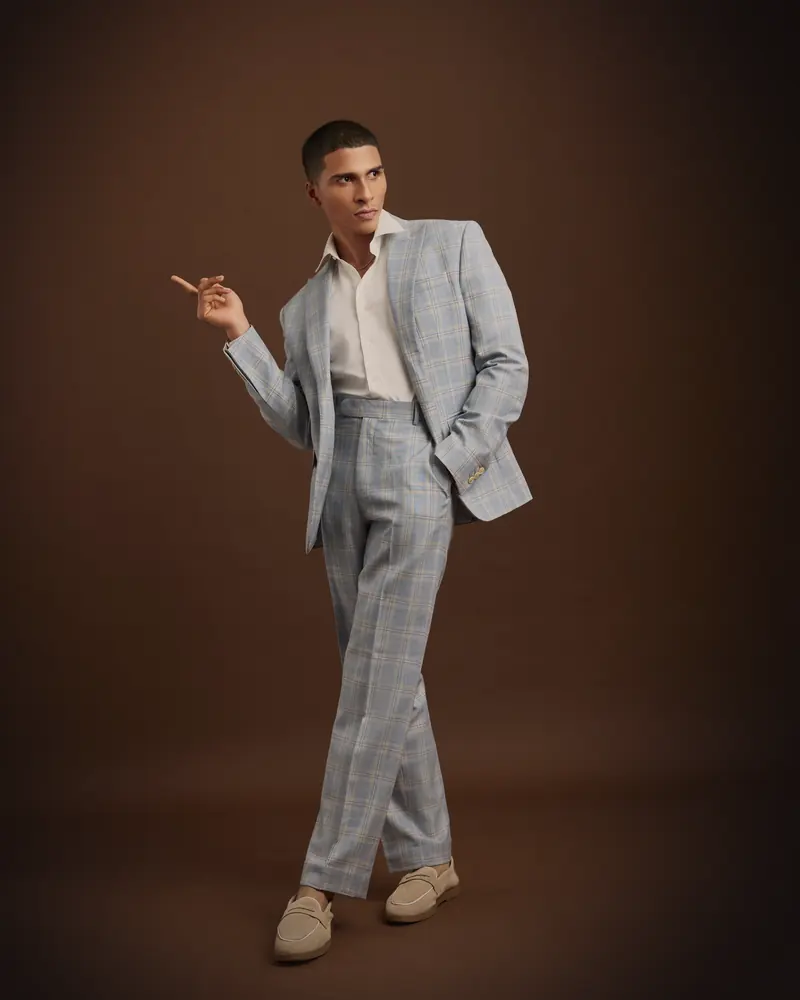
Worn
The same jacket, open · with its trousers, in the same check.
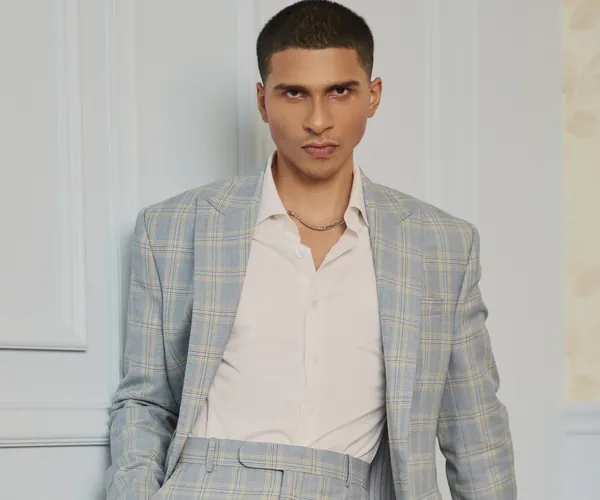
The check
Grey windowpane · notch lapel, worn with an open collar.
Asked before a first jacket
What should a first jacket be?
A navy hopsack. It works with grey trousers, with denim, and with most invitations the city sends.
Will it work with trousers I already own?
Bring them to the fitting and we balance the jacket against them. Or have the trousers made to go with it.
A jacket or a suit first?
If your week is meetings, the suit. If it is dinners, travel and Fridays, the jacket.
Which buttons?
Horn or corozo as standard; brass on request. Decided with you at the fitting.
Commission it from your wardrobe.
Your figures are on file; the house confirms every detail with you before anything is cut.