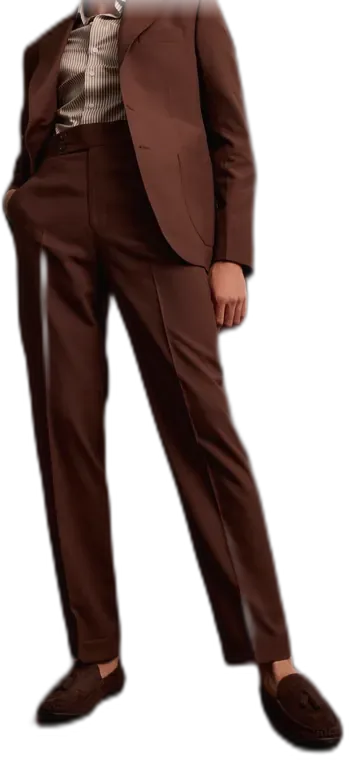
Two-piece suit
SuitsFrom₹35,000
The house two-piece: single-breasted, notch lapel, patch pockets.
Commission thisTwo-piece suit
SuitsThe house two-piece: single-breasted, notch lapel, patch pockets.
Commission this
From₹35,000
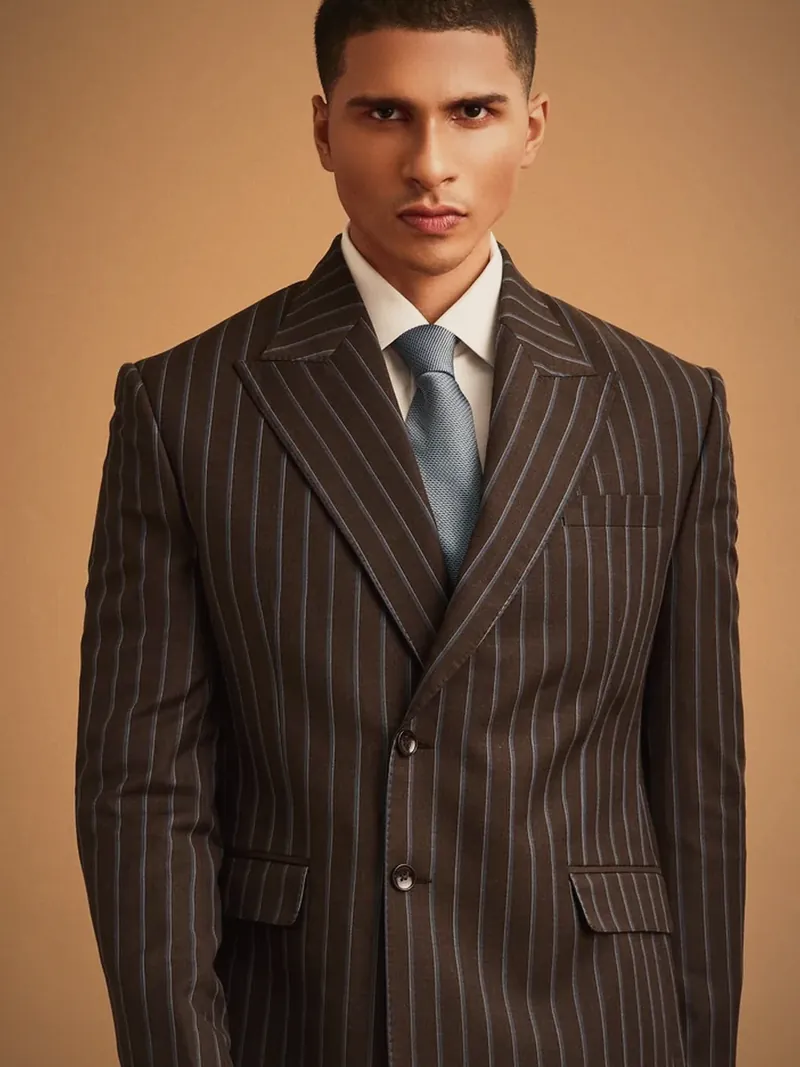
Watch someone reach for a glass. On a hand-cut jacket the collar stays against the shirt through the whole gesture; on a factory jacket it lifts and gaps. The collar is sewn on by hand, curved to the neck it was measured against — it is the first thing a tailor looks at on a stranger.
Arms do not hang straight — they pitch slightly forward. A bespoke sleeve is set to your pitch, so the sleeve is clean when your arm is at rest. Ripples at the front or back of a sleeve mean it is set at the wrong pitch.
A hand-padded lapel curves up from the button in a soft curve; a fused lapel is creased flat like a folded letter. Look at the lapel side-on. The roll is the visible signature of the canvas you cannot see.
On a striped or checked cloth, look where the sleeve meets the shoulder and where the pocket meets the body. Matching a pattern across those seams wastes cloth and takes time, which is exactly why it is done — or not done.
A hand-sewn buttonhole is dense, slightly irregular, finished with a knot of thread like a full stop. A machine buttonhole is flat and even. The lapel buttonhole is the place every tailor checks another tailor.
None of this is decoration. Each sign marks a decision made against one person’s body rather than a size chart — which is the whole argument for a bespoke suit, made visible.
The house two-piece: single-breasted, notch lapel, patch pockets.
Commission thisThe house two-piece: single-breasted, notch lapel, patch pockets.
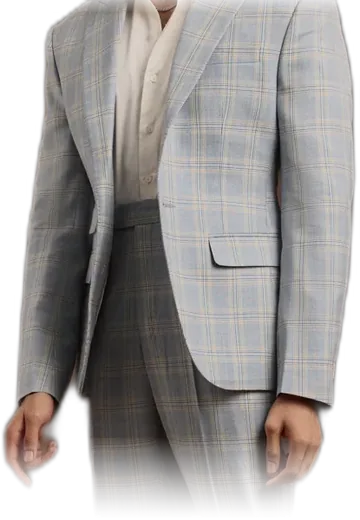
An odd jacket cut to be worn open, moved in and sat in.
Commission thisAn odd jacket cut to be worn open, moved in and sat in.
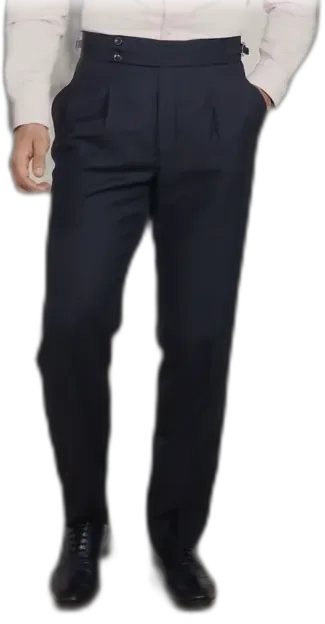
Trousers drafted from your waist and the way you stand.
Commission thisTrousers drafted from your waist and the way you stand.