20 August 2026 · The Journal
The working timeline
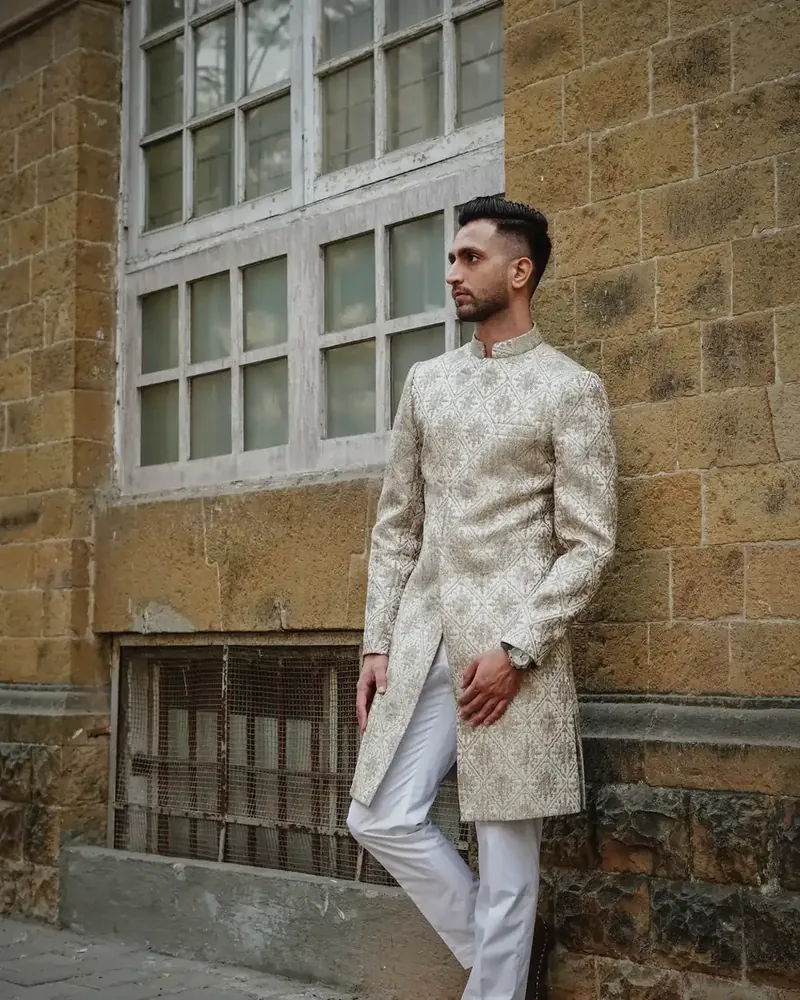
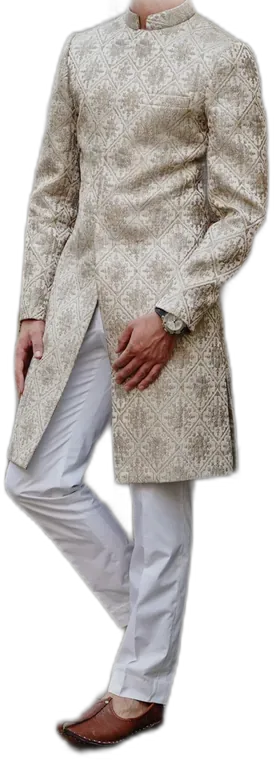
Twelve weeks out — the decision. Not the fitting; the decision. Which garments, for which functions. A wedding is rarely one garment: a sherwani for the pheras, a bandhgala for the reception, perhaps a tuxedo if the cocktail evening demands it. Each is its own commission.
Ten weeks out — the first sitting. Measurements taken once and written down for life. The cloth chosen from the books while there is still choice — in season, the good lengths go first. If the family is coming in from abroad, this is the sitting to schedule around the flight; everything after it can flex.
Six to four weeks out — the fittings. The garment is basted and corrected on your body: two fittings, the basted fitting and a second one before the finish. Tell us about any planned change in weight at the first sitting, not the last.
One week out — the finish, deliberately early. The week before a wedding is chaos, and the garment should be the one thing already done.
What if you are late?
Write to us today. We take a small number of urgent orders when the atelier has room. Write with your date and we will tell you the same day whether we can. The planner gives you a first answer for your date. A suit, tuxedo or bandhgala takes four to five weeks; a sherwani ten to twelve. How long a bespoke suit takes →
The NRI question
Many of our wedding clients fly into Mumbai. The pattern that makes bespoke slow also makes it travel well: once your first sitting is done and the pattern drafted, later fittings compress into a single trip, and the finished garment is collected days before the functions. If you are planning a wedding trip to India, write before you book the tickets — the sittings are built around your itinerary. Wedding clothes →
Sherwani or bandhgala — which for which function?
The sherwani is for the ceremony; the bandhgala is for receptions and every formal evening after. What a groom should wear →
The fathers and brothers
Bring them to the same first sitting. Group commissions share the calendar and the cloth books, and the wedding photographs are better for it. Matching the bride’s outfit — or deliberately not matching it — is a design decision made at the cloth stage, not the final fitting. Bring the swatch, or have the designer send it.
← The Journal